The State of AI Transformation at Work – AI is being deployed. Employees aren't being enabled.
“Survey Fatigue Isn’t Real – Inaction Fatigue Is”
Here are five experts tips for transforming your listening strategy into a powerful trust-building machine.


Lisa Ardill
Content Editor at Workvivo
We’ve all been there: your organization is drowning in data from pulse checks, annual surveys, and exit interviews, yet nothing seems to change.
In a recent Workvivo webinar, Justin Black, our Head of Employee Listening and Insights, sat down with two people-strategy powerhouses – Alexis Fink, a people analytics pioneer with decades of experience at Meta and Microsoft, and Adaya Vieira, VP of People and Culture at HX Expeditions.
Together, they unpacked a critical truth for internal communications professionals: collecting feedback is only half the battle. To build a thriving workplace, organizations must bridge the gap between data collection and visible, human-centric action.
Here are five key takeaways from their conversation on how to transform your listening strategy into a powerful trust-building machine.
1. Combat inaction fatigue, not survey fatigue
Many leaders worry about overwhelming employees with too many questionnaires. However, as Alexis sharply notes, “survey fatigue” is a myth – the real culprit is inaction fatigue.
When employees take time out of their busy days to share their perspectives and only receive silence in return, organizational trust erodes. Internal comms professionals must shift the narrative from just measuring scores to demonstrating visible progress.
Feedback shouldn't be treated like a passive customer satisfaction metric; it must be an ongoing dialogue that connects directly to improving the everyday employee experience.
2. Design a strategy around people, not tools
When building a modern listening ecosystem, don't just focus on the instrument – whether it’s an annual census or a quick pulse check.
Instead, start with your core people strategy. Your listening touchpoints should mirror critical milestones in the employee career lifecycle, such as onboarding, promotions, and reorgs.
Don’t ignore the digital “public square” either. Safely harvesting sentiment from open communication channels or your internal comms platform provides rich, qualitative context that traditional, fixed-benchmark multiple-choice questions often wash out entirely.
3. Lean into radical transparency
Employees often withhold honest feedback due to a fear of surveillance or a lack of true anonymity. Adaya suggests countering this by introducing a culture of radical transparency.
By hosting informational sessions, her team explicitly shows employees how survey data is processed, what managers can see, and how individual privacy is strictly protected.
Removing the ambiguity around tools dismantles fear. When employees see the mechanics behind the screen, they feel safer delivering genuine feedback, turning what leaders often dread as “Pandora’s box” into a valuable organizational lever.
4. Anchor your trust in “benevolence”
Organizational trust relies on competence, integrity, and benevolence. While most companies focus on competence, they frequently neglect benevolence – the proof that leadership genuinely has the employees’ best interests in mind.
Proving benevolence requires sophisticated backend analysis to uncover the real story within the numbers. Avoid over-indexing on localized negative comments or falling into analytical traps where aggregated data obscures reality.
Utilizing advanced insights allows you to confidently isolate meaningful trends, protect privacy, and implement targeted interventions that lift every team.
5. Bridge the gap between listening and executive comms
The ultimate way to close the feedback loop is through highly visible executive communications.
Comms professionals hold the keys to making sure employees feel heard. Every major leadership update should explicitly reference the insights gathered from employee listening.
Adopting a simple, declarative stance – “We heard X, so we are doing Y” – directly connects executive action to employee voices. Whether changing the format of a town hall or shifting corporate policy, calling out the direct influence of employee feedback validates their vulnerability and creates a powerful engagement flywheel.
As Alexis says, “Survey fatigue isn’t real; inaction fatigue is. Your right to collect data is earned entirely through using it.”
Give your workforce a voice they can finally feel
Transforming employee listening from a checkbox exercise into a continuous dialogue is the secret to building deep organizational trust. By focusing on actionable takeaways, empowering managers, and backing data with true benevolence, internal comms professionals can guide leaders out of the dark.
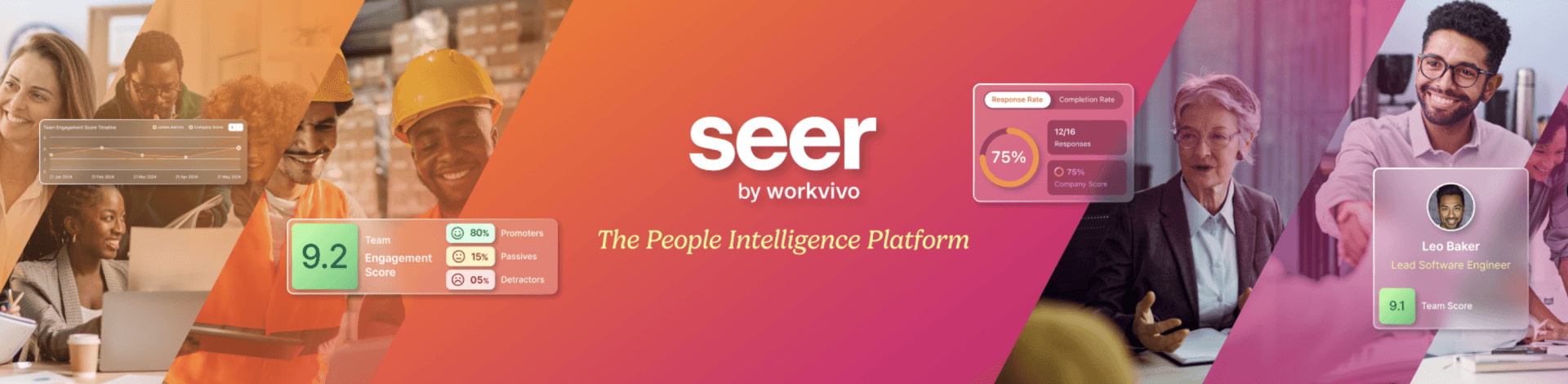
Ready to take action? Discover how Workvivo’s new people intelligence platform, Seer, connects employee feedback directly to impactful business solutions.
Authors:
Lisa Ardill
Content Editor at Workvivo