Meet the frontline workers behind some of America’s most people-first cultures
2025 Highlights: Workvivo Wrapped


Lisa Ardill
Content Editor at Workvivo
As 2025 comes to a close, we’re getting nostalgic about the stories we told throughout the year. From industry research and thought leadership to practical resources and expert guides, we had a busy 12 months.
Across our research, guides, templates, case studies, and expert insights, a few clear themes emerged: the urgent need to better engage frontline teams; the rise of AI as both an efficiency tool and a strategic differentiator; the growing expectation for workplaces to be simpler, more human, and more connected; and the continued importance of strong cultural foundations that employees can actually feel.
These themes shaped the content we created this year, from practical frameworks for internal comms leaders, to fresh thinking on EXP adoption, to resources that help organizations measure culture, reduce burnout, and communicate with clarity.
We brought in industry voices like Dafna Arad and Joanna Parsons, spotlighted customer impact through our Workvivo for Good program, and shared major product updates that show where employee experience tech is headed next.
To mark such a big year, here’s a deeper dive into some of our top moments in content.
The Frontline Gap
In June, we launched a major research report focusing on what we call the “Frontline Gap”. We surveyed more than 7,500 frontline professionals and discovered that poor communication and engagement strategies are leaving many feeling disconnected, disempowered, and undervalued, especially in comparison with their desk-based colleagues.
We wanted to know: Are workplaces doing enough to include frontline employees in their company culture?
The short answer: no.
A Frontline Gap exists across industries and countries, leaving half of frontline workers believing their company cares more about office-based colleagues than about them.
Here’s what stood out:
- 49% believe they have a bigger impact than their desk-based colleagues – but they’re not recognized for it.
- 87% aren’t sure their company culture even applies to them.
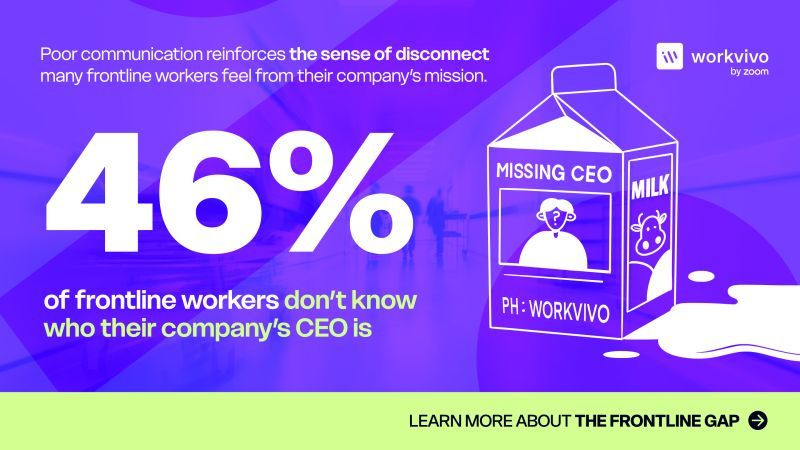
- A whopping 46% don’t even know who their CEO is.
These gaps – in culture, recognition, communication, technology, and career growth – aren’t just people issues. Left unaddressed, they drive attrition, damage brand reputation, and weaken customer experience.
The Frontline Gap’s impacts are global, but the effects differ by region. In APAC, for example, just 3% of frontline workers are confident their company culture applies to them – a significant drop from the global average of 13%.
Some 59% of frontline workers in LATAM say their company cares more about office workers than them, a significant spike on the global average of 50%. Frontline workers in LATAM also cite “lack of recognition” as the number-one factor compromising their sense of belonging at work.
And NAMER is the most likely cohort to say that much of their company’s communications seem irrelevant to them (58% compared to 48% globally). There is so much nuance to how the gap affects workers around the world.
With the Frontline Gap having so much reach, it’s no surprise our research struck a chord – industry experts such as Melody Brue (Forbes) and Bruce Daisley (Make Work Better) gave their own takes on the findings, which suggests that awareness of the issue is growing. Hopefully, continuing this conversation will help close the divide.
Measuring What Matters in Internal Comms
With this global report, we set out to answer another big question: Are internal communicators equipped to prove the ROI of their work?
Once again, the short answer was no. We surveyed more than 5,000 IC professionals, and found that even though most IC teams enjoy strong executive support, healthy budgets, and a seat at the table, a staggering 92% still can’t prove their ROI.
We discovered that:
- 46% of IC teams say metrics not resonating is the biggest barrier to reporting impact to leadership, making it the top issue.
- 34% of IC leaders identify inadequate tools or data as the biggest challenge in measuring internal communications.
- Only 36% of IC leaders rate engagement with comms as very high, leaving significant room for improvement.
- 44% of IC professionals say that difficulty measuring impact is the top challenge for internal communications over the coming year.
Measuring What Matters in Internal Comms sparked a lot of interest, and the reaction highlighted the very real challenge faced by internal comms leaders in proving the value of their work.
In some ways, that's inevitable – internal comms will never be tied directly to revenue, so the value will always be approximated through other signals. But a shared understanding of how internal comms really adds value to organizations would be a huge benefit for all involved.
The Internal Comms & Culture Maturity Assessment
Measuring the impact of comms is hard, as we’ve just seen, and measuring the health of an organizations’s culture is notoriously tricky. So we built the Internal Comms & Culture Maturity Assessment to help organizations understand their cultural health and get a temperature check on the effectiveness of their internal comms.
The assessment distills this complexity into 12 questions that surface both strengths and blind spots across four pillars we see as fundamental to a healthy workplace: Informing, Connecting, Engaging, and Listening.
What makes it useful isn’t just the scoring or the spider graph, though those bring clarity. It’s that the assessment becomes a catalyst for better conversations. It gives people a shared language to talk about culture and communication – topics that often feel intangible or too broad to pin down.
At its core, this tool is about elevating culture from a buzzword to something measurable, discussable, and ultimately actionable. It helps organizations take a first, practical step toward understanding the experience they’re creating for their people. And ultimately, that's what Workvivo itself really stands for.
2026: Onwards and upwards
As we look back on 2025, one thing is clear: this was a year defined by curiosity, creativity, and meaningful conversation. Our content didn’t just tell stories, it helped shape them. It shone a light on the realities facing frontline workers, empowered internal communicators with new insights, and brought practical tools into the hands of leaders working to build more connected, people-first workplaces.
Looking ahead, the work continues. The landscape of employee experience is changing fast, and the expectations placed on leaders and communicators are rising just as quickly.
Here’s to another year of learning, listening, and building workplaces where everyone feels they belong. Stay tuned for more of these stories – and as always, thanks for reading.
