
Meet the frontline workers behind some of America’s most people-first cultures
Yammer Alternatives in 2026: 10 tools compared
Are you searching for Yammer alternatives and competitors? Yammer is an enterprise social networking service from Microsoft. It’s primarily used for private communication within organizations, but can also help teams communicate through cross-company networks. But is Yammer right for you? With so many team collaboration platforms available, making the decision can feel overwhelming. To help you put your best foot forward and understand your options before committing to a specific solution, here are 10 other tools to check out.
Are you searching for Yammer alternatives and competitors? Yammer is an enterprise social networking service from Microsoft. It’s primarily used for private communication within organizations, but can also help teams communicate through cross-company networks.
But is Yammer right for you? With so many team collaboration platforms available, making the decision can feel overwhelming. To help you put your best foot forward and understand your options before committing to a specific solution, here are 10 other tools to check out.
Why look for a Yammer alternative?
While Yammer has been a staple in enterprise communication for years, many organizations are now reassessing whether it truly fits their needs. Common challenges with the platform include:
- Complex user experience. Yammer’s interface can feel cluttered and unintuitive, making it difficult for employees to adopt and engage consistently.
- Limited integration options. Seamless connections with tools like HR systems, project management apps, and productivity suites are essential. Yammer’s integrations often fall short, forcing teams to rely on workarounds.
- Engagement challenges. Because Yammer is primarily a messaging board, it lacks the more modern, people-centric features that help foster community and connection across distributed teams.
- Pricing and value concerns. As part of Microsoft 365 licensing, Yammer may feel like an add-on rather than a fully dedicated employee experience platform, leading some companies to question the potential return on investment (ROI).
- Slow pace of innovation. With Microsoft shifting focus toward other products like Viva Engage, Yammer’s roadmap has become less clear, leaving businesses uncertain about long-term support.
For organizations seeking a more engaging, intuitive, and future-proof solution, exploring alternatives to Yammer is a natural next step.
Top 10 Yammer alternatives in 2025
Whether you’re running an SMB or an enterprise, there’s a Yammer alternative for you in the market. Let’s take a look at the ten most popular platforms.
1 – Workvivo
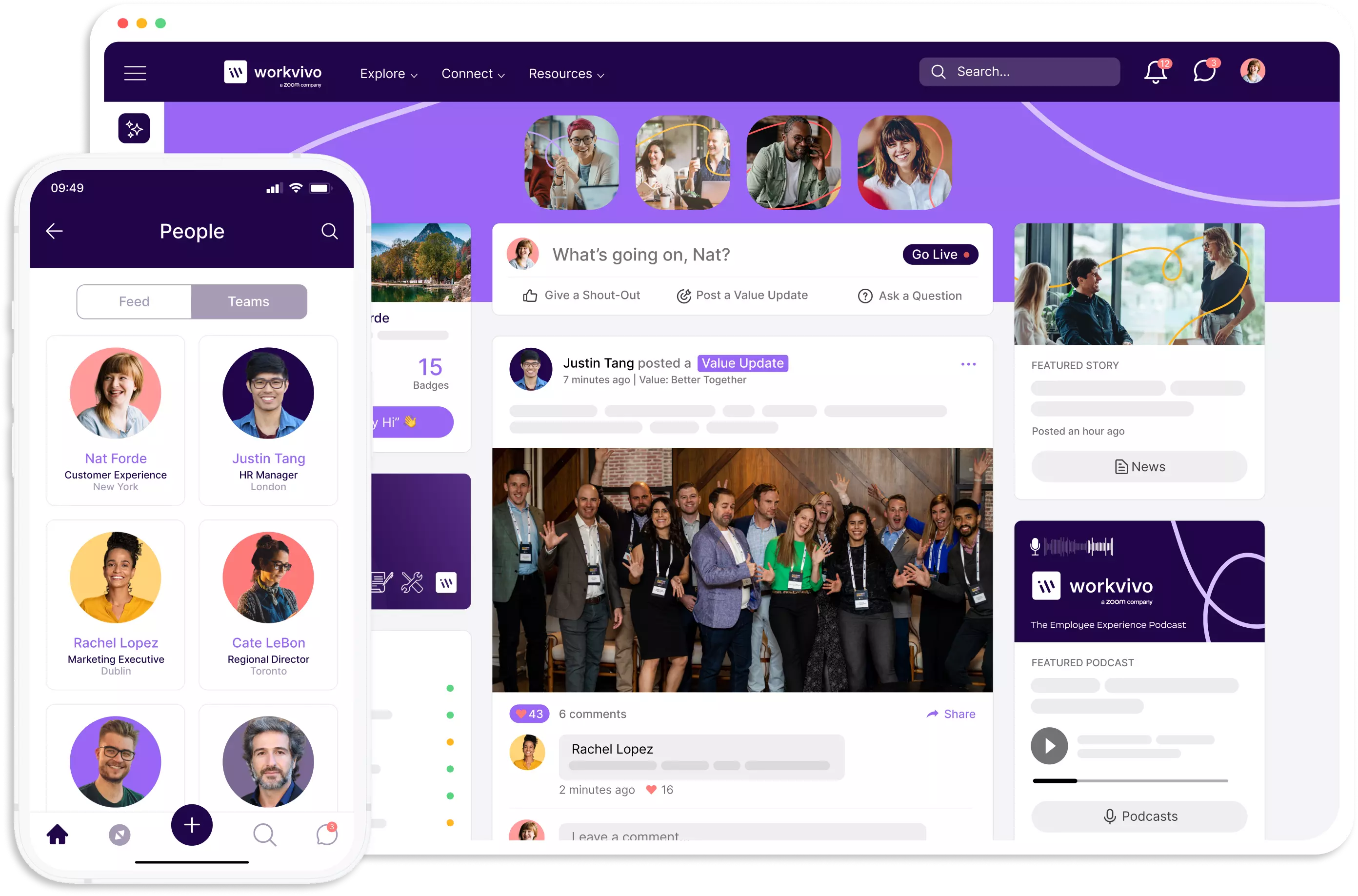
Workvivo is a leading employee experience platform (EXP) designed to streamline internal communication and enhance employee engagement. With a strong focus on creating a digital-first workplace, Workvivo aims to empower individuals and foster emotional connections among team members.
Workvivo brings your company culture to life digitally, ensuring that every member of your team feels included and appreciated, regardless of their location. If your organization needs a purpose-built platform to effectively communicate and engage with a diverse workforce, Workvivo is the solution for you.
- G2 review: Workvivo review
- Pricing: A Workvivo subscription is based per user, per month (billed annually). Contact the Workvivo team to request a quote today.
Pros
- User-friendly interface and a familiar social experience, making it easy for everyone to adopt and utilize the platform effortlessly
- Focus on communication and engagement, which leads to better retention rates, lower absenteeism, and increased overall productivity
- Centralized hub for all your communication and engagement needs, providing a clear center of gravity for your employees and ensuring seamless collaboration
- Peer-to-peer exchange, where leaders and staff can communicate directly without any intermediaries, fostering a strong sense of connection and belonging
- Open and two-way communication, allowing employees to share ideas and interact with one another, thereby promoting inclusion and higher levels of engagement.
Cons:
- If your primary requirement is an internal social media-style communication tool, Workvivo might be too robust for your specific use case
- Workvivo’s pricing structure may not be suitable for companies with fewer than 100 employees, as it might pose cost challenges and resource limitations
Workvivo is best for:
- Improving employee engagement and fostering a strong sense of belonging.
- Enhancing employee retention, hiring, and overall productivity.
- Cultivating a vibrant company culture and boosting performance across the organization.
Workvivo’s Key Features
- Employee Communication: Workvivo consolidates all employee conversations into a single platform, providing multiple channels for communication, including posts, articles, mobile notifications, newsletters, podcasts, and live streams.
- Employee Engagement: The platform offers a wide range of tools to facilitate employee engagement, such as feedback collection, pulse surveys, recognition shoutouts, milestone celebrations, and introduction videos for new starters.
- Digital Hub (Intranet): Workvivo serves as a comprehensive digital hub where companies can store and share documents and resources, integrate with other tools in their tech stack, collaborate on wiki pages, and even launch additional apps from within the platform.
- Analytics: Workvivo provides robust analytics capabilities, enabling organizations to track and measure employee usage data. This valuable information empowers data-driven decision-making for effective performance management.
2 – Slack
Slack is a popular workplace communication tool that brings conversations, files, and workflows together in one platform. Its core feature is channels, organized spaces where teams can collaborate in real time or asynchronously.
Slack also supports direct messaging, video and voice calls, and robust search functionality to quickly find past discussions. With thousands of integrations (from project management tools to CRM systems), Slack extends well beyond messaging, becoming a central hub for work.
Its mobile and desktop apps keep teams connected anywhere, making it especially valuable for fast-moving organizations that rely on quick, transparent communication.
- G2 Review: Slack review
- Pricing: Pricing page
- Ideal for: Tech-savvy teams, startups, and fast-paced organizations that need instant, real-time collaboration.
Why Slack is a decent Yammer alternative:
- Real-time, channel-based communication that reduces email reliance
- Extensive integrations with third-party apps to streamline workflows
- Modern, user-friendly design that drives high adoption across teams
3 – Simpplr
Simpplr is a modern intranet platform designed to improve employee communication, collaboration, and engagement. Positioned as an employee experience hub, it offers features like personalized news feeds, AI-driven content recommendations, and advanced search to ensure employees can easily find the information they need.
Simpplr also provides tools for leadership communication, social recognition, and employee directories to strengthen organizational culture. With a strong focus on usability and analytics, it enables internal comms teams to measure engagement and optimize messaging.
Its mobile-friendly design makes it easy for distributed workforces to stay connected and informed, regardless of location.
- G2 Review: Simpplr review
- Pricing: Pricing Page
- Compare: Simpplr Alternatives
- Ideal For: Large enterprises and internal communications teams seeking a dedicated, modern intranet solution.
Why Simpplr is a decent Yammer alternative:
- Purpose-built for internal communications with advanced personalization and targeting
- Strong analytics and reporting to measure employee engagement
- User-friendly design and mobile accessibility that improve adoption
4 – Jive
Jive is an enterprise collaboration and intranet platform designed to connect employees, knowledge, and company culture in one place. It offers a range of features including team collaboration spaces, knowledge sharing hubs, and social networking tools that encourage cross-departmental communication.
It also provides powerful search functionality, employee directories, and content management tools to make information more accessible across large organizations. Its analytics and reporting features help leaders track engagement and collaboration patterns.
With a focus on community-building, Jive supports both real-time and asynchronous communication, making it a long-standing option for enterprises needing a centralized digital workplace.
- G2 Review: Jive review
- Pricing: Pricing page
- Compare: Jive Alternatives
- Ideal for: Large, complex organizations that need a robust intranet and knowledge-sharing solution
Why Jive is a decent Yammer alternative:
- Comprehensive intranet and knowledge management capabilities
- Community-focused features that help foster collaboration at scale
- Analytics to track adoption and employee engagement
5 – Microsoft Viva
Microsoft Viva is an employee experience platform integrated into Microsoft 365 and Teams. It connects people, insights, learning, and goals to enhance engagement, productivity, and well-being.
It’s customizable, extensible, and accessible from anywhere. However, it relies heavily on the Microsoft ecosystem. Organizations that don’t already use Microsoft Teams or Microsoft 365 may face integration challenges or limited functionality, making it less accessible or cost-effective.
- G2 Review: Microsoft Viva review
- Pricing: Pricing page
Why Microsoft Viva is a decent Yammer alternative:
- Viva Engage is natively embedded in Teams, Outlook, and SharePoint, making it easier to access and use within daily workflows
- It offers sentiment analysis, surveys, and recognition features like badges and certificates to boost employee motivation and interaction
6 – Chatter
Chatter, developed by Salesforce, is an enterprise social networking tool designed to enhance collaboration within organizations. It allows employees to create groups, share updates, and collaborate on files directly within the Salesforce ecosystem.
Chatter’s feed-based structure makes it easy to follow projects, track progress, and connect with colleagues across departments. Since it’s natively integrated into Salesforce, it’s especially useful for sales, service, and marketing teams who already rely heavily on the platform to manage customer relationships and workflows.
- G2 Review: Chatter review
- Pricing: Pricing page
- Ideal for: Salesforce-centric organizations looking for a built-in collaboration tool to complement their CRM workflows
Why Chatter is a decent Yammer alternative:
- Native integration with Salesforce for seamless workflows
- Feed-based collaboration that supports project updates and knowledge sharing
- Group functionality for teams and cross-department collaboration
7 – Flock
Flock is a team communication and collaboration platform built to streamline workplace conversations. It offers real-time messaging through channels and direct chats, along with built-in productivity tools like shared to-do lists, polls, and reminders.
Flock also supports video conferencing, file sharing, and integrations with popular apps such as Google Drive, Trello, and Asana. Its lightweight design and user-friendly interface make it easy for small to mid-sized teams to adopt quickly, improving transparency and coordination across projects..
- G2 Review: Flock review
- Pricing: Pricing page
- Ideal for: Startups and small to mid-sized businesses looking for an easy-to-use, cost-effective communication tool
Why Flock is a decent Yammer alternative:
- Simple, intuitive interface that encourages quick adoption
- Built-in productivity features like tasks, notes, and polls
- Affordable pricing suited for smaller teams
8 – MangoApps
MangoApps is an all-in-one digital workplace platform that combines communication, collaboration, and intranet features. It provides tools for company-wide messaging, project and task management, file sharing, and knowledge management – all within a unified hub.
With customizable modules, organizations can tailor MangoApps to their unique needs, from HR processes to employee engagement initiatives. Its mobile and desktop apps support both frontline and office-based employees, helping to create a connected, informed workforce while reducing reliance on multiple disconnected tools.
- G2 Review: MangoApps review
- Pricing: Pricing page
- Compare: MangoApps Alternatives
- Ideal for: Mid-sized to large organizations seeking a flexible, all-in-one digital workplace solution
Why MangoApps is a decent Yammer alternative:
- Unified platform that combines intranet, collaboration, and communication
- Highly customizable to fit different organizational needs
- Strong support for both frontline and desk-based employees
9 – Beekeeper
Beekeeper is a mobile-first employee communication platform designed for frontline and deskless workers. It offers messaging channels, announcements, shift scheduling, and task management, all optimized for on-the-go access.
The platform also supports document sharing, surveys, and integrations with key business systems, helping organizations streamline operations while keeping employees informed and engaged.
Its focus on mobile accessibility and ease of use makes it particularly effective for distributed teams and employees who don’t have regular access to a traditional desktop environment.
- G2 Review: Beekeeper review
- Pricing: Pricing page
- Compare: Beekeeper Alternatives
- Ideal for: Organizations with large frontline or remote workforces that need a mobile-friendly communication and engagement solution
Why Beekeeper is a decent Yammer alternative:
- Mobile-first design tailored for frontline and deskless employees
- Messaging, task management, and shift coordination in one platform
- Integrations with key business systems to streamline workflows
10. FirstUp
FirstUp is an employee communications platform designed to deliver targeted messages across an organization. It centralizes content from leadership, HR, and operations into personalized feeds, ensuring employees receive the right information at the right time.
Features include content scheduling, analytics, campaign management, and mobile access for distributed teams.
By combining messaging with insights, FirstUp helps organizations improve engagement, align teams, and measure the impact of internal communications across both desk-based and frontline employees.
- G2 Review: FirstUp review
- Pricing: Pricing page
- Compare: Firstup Alternatives
Why FirstUp is a decent Yammer alternative:
- Personalized content feeds for targeted communication
- Analytics and reporting to measure employee engagement
- Mobile-friendly platform for distributed and frontline teams
The takeaway
When considering a Yammer alternative or competitor, it’s essential to read reviews, compare pricing, and consider which features are most important to your team. With these top 10 options, you’re sure to find a platform that meets your needs.