The State of AI Transformation at Work – AI is being deployed. Employees aren't being enabled.
How To Improve Organizational Culture: Best Practices & Insights


Lisa Ardill
Content Editor at Workvivo
Organizational culture is the collection of shared values, beliefs, and daily experiences that influence how people work together.
More than buzzwords, think of it as your company’s personality – the daily habits, the energy you sense before anyone speaks, or the unwritten rules that make working there feel energizing (or exhausting).
It’s no secret that culture can shape employee engagement and retention. But in financial terms, leaders may overlook how those dynamics influence growth. The challenge is translating something as human as culture into outcomes the balance sheet can recognize.
Data helps make that link tangible. Great Place To Work found that companies on its 100 Best Companies to Work For in 2025 list earn 8.5 times more revenue per employee than the US public-market average.
That advantage appears across industries, proving that trust and connection inside the company translate to stronger performance. Leaders in these organizations treat culture as a performance system. They measure it, invest in it, and align it with strategy so employees can do their best work.
In short, improving internal culture doesn’t mean offering free snacks or casual Fridays. You enhance it by creating an environment where people feel appreciated and motivated to contribute.
That’s what turns a good company into one everyone loves to be part of, while still delivering on the bottom line. With that in mind, let’s look at where to begin – because first, you need to know where your culture stands right now.
How to measure your current organizational culture
Use surveys, focus groups, exit interviews, and sentiment tracking to uncover engagement levels, communication gaps, and leadership impact. These tools reveal what motivates employees, where frustrations build up, and how connected people feel to the company. The results show where to act to improve your organizational culture.
Let’s examine these approaches in detail.
1. Start with employee surveys
Surveys are the quickest way to understand your culture. They give you a direct line into how employees experience work: what motivates them, what holds them back, and where small issues might be building up.
Keep surveys brief, focused, and anonymous. That’s how you get insights instead of polite answers. Ask about engagement, communication, leadership support, and how connected team members feel to the company principles.
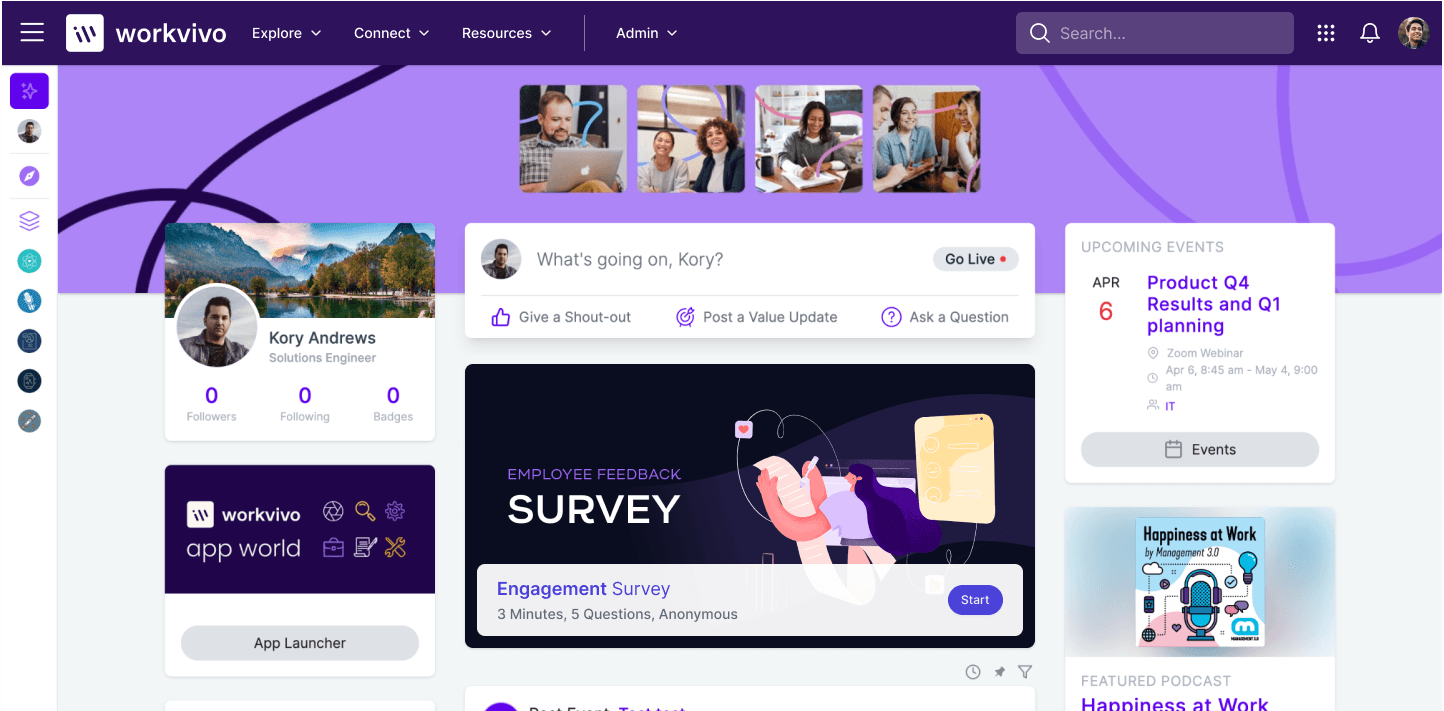
You can use an employee experience platform (EXP) to run quick, non-intrusive surveys right within your people’s daily workflow.
2. Follow up with focus group meetings
After surveys, it’s time for honest conversations. Follow up with focus group meetings to uncover the stories behind the numbers, the “why” behind the data.
Start by inviting a cross-section of employees from different teams, levels, and backgrounds. You want variety because culture doesn’t look the same from every seat. But keep each group small enough that everyone can speak comfortably.
Afterward, review the feedback. Look for themes, contradictions, and surprises. You might notice patterns around communication gaps, unclear priorities, or micromanaging behaviors that ripple through the organization.
3. Learn from exit interviews
These one-on-one interviews are where you’ll often hear the truth. When someone decides to leave, they tend to drop the filters and give you an inside view of how your culture feels day to day.
Ask open questions like “What made you decide to leave?” or “What might have made you stay?” The answers might reveal pain points, like burnout, communication gaps, or blocked growth paths.
Stay interviews work the same way, but from the opposite angle. Ask “What keeps you here?”, “What do you enjoy most about your work?” Feedback shows what’s worth protecting as you grow.
4. Track employee sentiment
Now, if you already have a comms platform in place, you can use some features to track how people feel about what’s happening across the organization. A sentiment analysis tool might look like this:
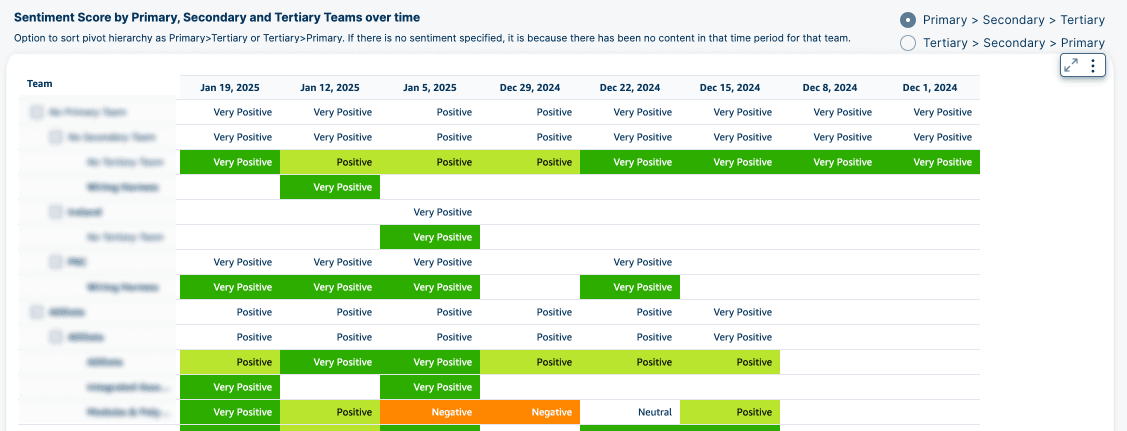
Every comment, update, or shoutout leaves a small emotional footprint. And together, those moments tell a bigger story about your organization’s culture.
Tracking sentiment helps you sense changes before they become problems. Maybe positivity drops in one team after a big reorg, or communication feels flat in a once-buzzing department.
The best part? You don’t need to analyze everything to get value from it. Even a rough read on overall tone helps you decide where to act.
Take our Comms & Culture Maturity Quiz – a quick, free assessment that shows how your communication and culture efforts measure up. In just two minutes, you’ll get a personalized report with actionable steps to boost engagement and employee experience.
With these measurement tools in place, you’re ready to take concrete steps. Let’s explore how to improve your organization’s culture through six practical moves.
How to improve your organizational culture
You can elevate your work culture by aligning values with strategy, encouraging open communication, and prioritizing learning opportunities. Empower employees through recognition and mentorship. Track progress with engagement and retention data to sustain growth, consolidate trust, and reinforce shared accountability within every level of the organization.
How can these principles translate into cultural change? Explore below.
1. Strengthen your core values and mission
Based on where your internal culture stands, ask yourself: does it reflect your values, mission, or even your purpose?
We know such concepts can feel distant from the day-to-day realities of running a business. They sound inspiring on paper, but can lose meaning when teams are under pressure or communication breaks down. But that’s when culture starts drifting away.
As former Woodie’s CEO, Declan Ronayne, put it: “There was not a high level of trust in the organization. There was no culture of recognition. There was no telling anybody anything. Messages that would cascade through the organization got as far as the store manager, never went any further. The business didn’t have any sort of mission, purpose, and values.”
That realization led to a reset. Leadership at Woodie’s, Ireland’s largest DIY, home, and garden retailer, focused on rebuilding credibility through open communication, consistent feedback, and everyday recognition.
Over time, its people came to live by six clear principles: enthusiasm, expertise, helpfulness, homeliness, inspiration, and great value.
And the result? Beyond the gains in engagement and recognition, the company has earned 12 Great Place to Work awards, including Best Workplace for Women, and built a culture defined by openness, trust, and pride. Check out Woodies’ full story.
You may not need a reset, but a few focused steps can strengthen your core principles and mission:
- Show values in action: Explain how key decisions (from promotions to policies) reflect your cultural pillars so employees see alignment between what’s said and what’s done.
- Connect the mission to goals: Map team and individual objectives directly to your mission to keep every project tied to the broader purpose.
- Hold leaders accountable: Review incentives, behaviors, and culture metrics yearly to ensure leadership consistently models and reinforces the company’s core values.
2. Create a healthy workplace
Stress, anxiety, burnout – three words you can’t afford to ignore when seeking to improve organizational culture. According to Headspace’s Workforce State of Mind Report, six in 10 employees have thought about leaving their job for mental health reasons.
Although work may not cause every case of stress or burnout, it can pour fuel on the fire. Poor communication, unclear expectations, or constant pressure can turn good jobs into draining ones.
A positive work environment flips that pattern. When people have flexibility, fair workloads, and real work-life balance, they can manage pressure rather than be consumed by it. Add psychological safety, and teams feel free to speak up, share ideas, and ask for help when they need it.
Organizational anthropologist Timothy R. Clark, in The 4 Stages of Psychological Safety, explains: “We thrive in environments that respect us and allow us to (1) feel included, (2) feel safe to learn, (3) feel safe to contribute, and (4) feel safe to challenge the status quo… Fear shuts us down. We’re not happy and we’re not reaching our potential.”
Here are some practical ways to foster a healthy environment:
- Offer genuine flexibility: Give employees control over when and where they work to balance professional and personal responsibilities.
- Encourage time off: Make rest non-negotiable through paid leave, mental health days, and clear expectations for full disconnection.
- Talk openly about stress: Normalize conversations around mental health so that anyone feels safe speaking up early.
Employee well-being isn’t a side topic: discover three ways managers can support mental health at work.
3. Build connection and two-way communication
You can have the best tools, town halls, and newsletters, and still have no communication. That’s because culture comes alive in conversation, not in announcements.
A pure top-down approach means you stop hearing what’s happening – between teams, across departments, or on the frontline. And that’s exactly what Ryanair discovered.
You might know the airline for its quirky humor on social media, but behind the scenes, its internal communications used to be anything but bold. One-way updates, little feedback, and no clear way for people to reach leadership.
With more than 24,000 employees across Europe, that gap made it difficult to keep everyone connected. So, Ryanair decided to open up the conversation.
The company moved from a one-way intranet to an employee communication app where 90% of staff registered, and 13,000+ are active users.
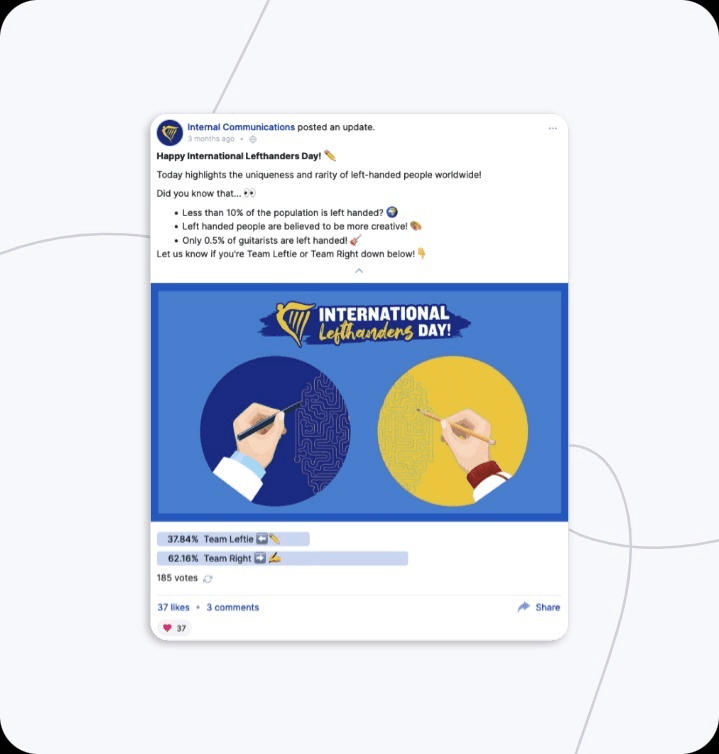
What Ryanair learned applies to every workplace: when everyone can speak and feel heard, organizational culture becomes a collective effort. Here’s how you can also start opening up conversations that connect people:
- Create “watercooler” moments, even if you don’t have a literal watercooler: Set up casual chat spaces where people share ideas, stories, or non-work topics.
- Keeping information consistent and accessible: When everyone receives the same updates, rumors and confusion disappear. Use one reliable hub for company-wide news.
- Try “coffee break” podcasts: It’s a fresh way to connect with employees (especially those who are on the frontline). Podcasts are more accessible than emails and carry more voice and story than static updates.
Just a reminder, though: don’t mistake internal comms for culture change – communication supports culture, but it can’t replace the meaningful shifts in behavior, confidence, and leadership that lasting change requires.
4. Support growth through mentorship and development
When your employees grow, everything else follows – performance, trust, and culture.
Investing in development and mentorship tells people they matter beyond today’s goals and motivates them to stay: Gallup reports that employees who feel encouraged to learn new skills are 47% less likely to look for another job.
The best cultures make that growth visible. Managers discuss career paths during one-on-ones, connect employees with mentors, and set learning goals that go beyond job descriptions.
But this development doesn’t necessarily require expensive programs. Webinars with industry experts, short coaching sessions, or job-shadowing opportunities can have a measurable impact when they happen consistently.
The key is to make learning time-bound and valued, not something squeezed between meetings. Follow these tips to turn development into a cultural habit:
- Offer structured mentorship: Pair experienced professionals with newer hires to share both skills and perspective. Reverse mentoring also helps leaders stay close to emerging trends.
- Rotate responsibilities: Give people a chance to explore related roles or projects. It builds agility and cross-team understanding.
- Recognize progress: Celebrate when someone completes a certification, masters a new tool, or takes on a leadership stretch.
Learning should feel built-in instead of optional, so development becomes one of the strongest cultural signals you can send: we grow together.
5. Recognize and reward effort
The same Gallup report from the point above also tells us: well-recognized employees are 45% less likely to leave within two years.
A positive organizational culture always prioritizes employee recognition because it reinforces a sense of belonging. People should feel genuinely appreciated so that their work carries meaning and their connection to the company evolves.
From quarterly or annual awards to a simple “kudos” shared in a chat, recognition works best when it’s part of the routine rather than a special occasion. Small, sincere gestures build consistency, which turns appreciation into a habit.
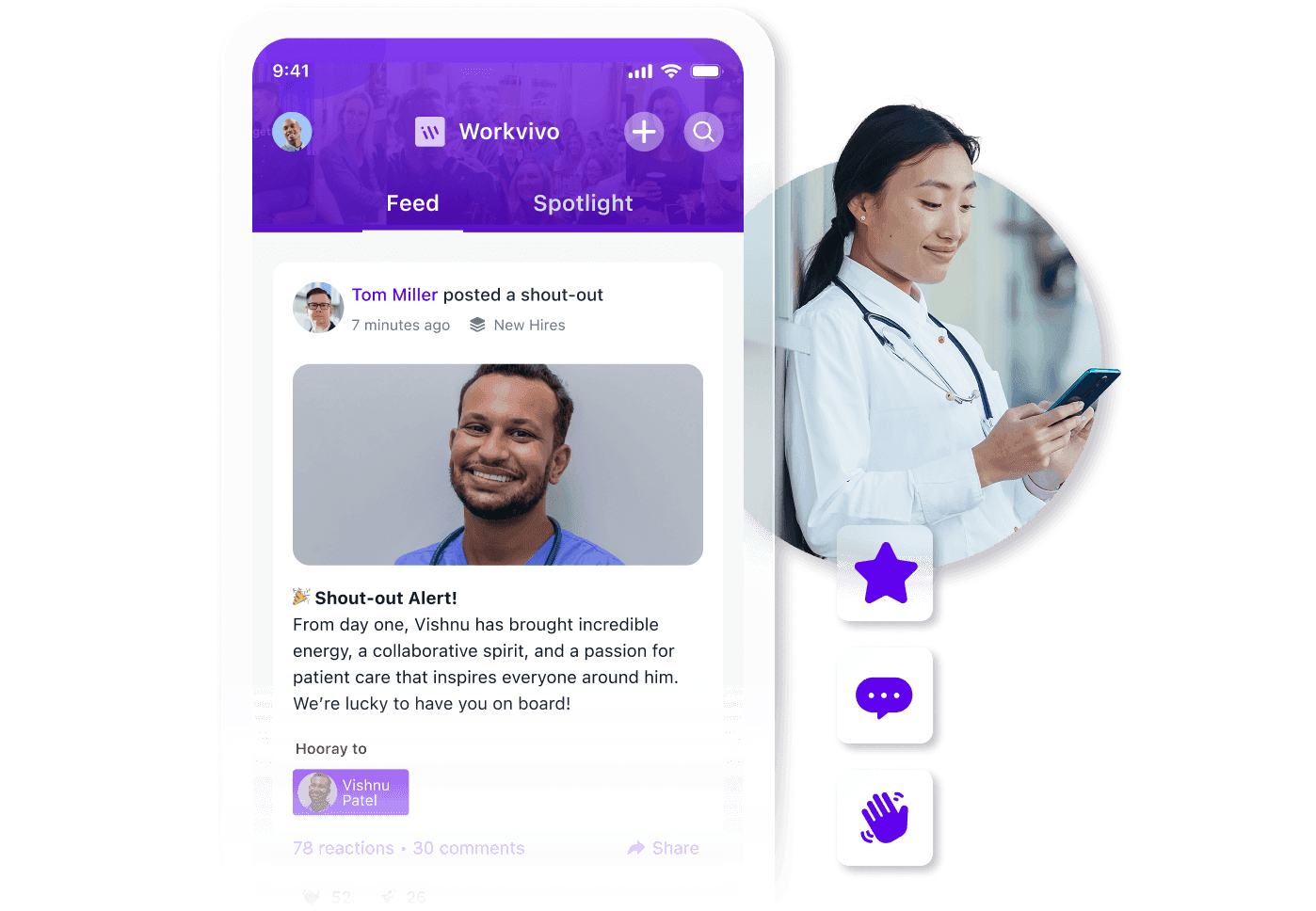
Here’s how you can embed that kind of recognition into daily culture:
- Make it specific and timely: Recognition works best when it’s fresh and points to an action or impact. “Your quick response kept the client on track” is better than “good job.”
- Bring peers into it: Empower employees to celebrate one another through peer-nomination tools or team channels.
- Use technology: Employee engagement platforms can help capture wins across distributed teams and keep appreciation visible in real time.
Recognition transforms effort into energy. Over time, that energy becomes the rhythm of your culture.
6. Measure progress and maintain momentum
Internal communications expert Dafna Arad says it best: company culture is not a campaign. It’s the quiet consistency that follows after the hype.
The only way to protect that consistency is to measure it and maintain momentum through small, steady actions. That means circling back to where we began on the topic of how to measure your organizational culture.
While surveys, engagement data, and retention metrics paint the outline, conversations, focus groups, and informal feedback show how culture feels day to day. Closing the loop through listening and action turns it into a living system that grows with your people.
Remember: culture isn’t what you say. It’s what you do when no one’s watching.
– Dafna Arad
Here’s how you manage organizational culture progress and momentum:
- Use consistent benchmarks: Track engagement, retention, and sentiment through quarterly surveys and pulse checks. Map changes over time so progress becomes visible.
- Compare results to business outcomes: Correlate culture data with retention, performance, and customer satisfaction metrics. A positive culture should show up in the numbers.
- Analyze how people participate: Monitor adoption and interactions on your internal channels. Look beyond vanity metrics (clicks and views) to see if employees comment, share, or act on information.
Want more insights on how to improve your organizational culture? Download our free guide “Building A World-Class Culture.”
What are the benefits of a strong, positive organizational culture?
The key advantages of a positive culture include higher employee engagement, retention, and productivity, all while improving the company’s brand reputation and long-term growth.
A healthy workplace environment also promotes collaboration, innovation, adaptability, organizational resilience, and efficiency, which ultimately drives better financial performance and overall business success.
Check out these benefits one by one:
- Engagement: Employees who feel connected to their workplace’s culture are 4.3× more likely to be engaged at work (Gallup, Global Indicator).
- Retention: Those who feel aligned with company values are 5.3× more likely to recommend it as a great place to work (Gallup, Global Indicator).
- Well-being: Employees in strong cultures are 62% less likely to feel burned out (Gallup, Global Indicator).
- Growth: Businesses led by “culture accelerator” CEOs reported 9.1% average revenue growth over three years, compared with 4.4% for others (Heidrick & Struggles, Aligning Culture with the Bottom Line).
- Resilience: High-trust workplaces rebounded 16.5% faster during market downturns (Great Places to Work, How High-Trust Culture Drives Business Success).
- Innovation: Inclusive workplaces generate more ideas, adopt change faster, and stay adaptable (Great Places to Work, How High-Trust Culture Drives Business Success).
These gains won’t come without a few challenges along the way, and managing organizational culture effectively is what determines whether those benefits last or fade. So, let’s see which friction points you could face.
6 common challenges of managing organizational culture
Every company culture initiative starts with energy and good intent. The test comes when daily pressures, shifting priorities, and human complexity enter the picture. Efforts succeed when you anticipate those hurdles and build systems that turn friction into forward motion.
Let’s look at six challenges you’re likely to face – and how to get ahead of each one.
1. Lack of connection with frontline workers
This first challenge appears in companies with distributed workforces – like retail, logistics, healthcare, or manufacturing – where teams rarely sit at a desk. These employees have distinct realities that generic initiatives often miss.
And according to our 2025 report, The Frontline Gap, 87% of frontline workers aren’t sure their company culture applies to them. Even more concerning, four in 10 say their organization doesn’t care about them as a person.
How to get ahead of this challenge: Build a digital hub for the whole business, an employee app that works on mobile and gives everyone a voice. Share leadership updates, celebrate frontline wins, and make it easy for people to talk across roles and regions.
2. Excessive micromanagement
One of the most damaging habits for culture is micromanaging every move. It kills initiative and tells people you don’t believe in them. Teams under constant oversight lose energy and confidence – two things that keep internal culture alive.
How to get ahead of this challenge: Set clear expectations, then step back. Give people freedom to decide how they’ll deliver results. Recognize ownership and problem-solving, not perfection.
3. Unclear or unlived company core values
Strengthening your values was the first step in learning how to improve your organizational culture. But that doesn’t mean you won’t face obstacles when practicing what you preach.
Principles lose meaning when they’re not visible in daily actions or leadership decisions.
How to get ahead of this challenge: Keep core ideals front and center – in hiring, employee recognition, and performance conversations. When people see leaders making decisions that align with those values, belief turns into behavior.
4. Lack of buy-in across the organization
Whether it’s employees or leadership, not everyone will be all in from day one. Some resist because they’re tired of change; others don’t see what’s in it for them. Even great culture plans go nowhere without buy-in.
How to get ahead of this challenge: Start small and show results. Highlight stories where culture improvements made work better. Ask for feedback early, invite critics into the process, and give them ownership. People support what they help create.
5. Inconsistent leadership
When leadership turnover feels like a revolving door, culture loses its anchor. Each new manager brings a slightly different tone, and teams start questioning what the company stands for. That inconsistency can undo years of progress.
How to get ahead of this challenge: Anchor culture in leadership behavior so it outlasts any individual. Build frameworks, rituals, and communication habits that stay consistent through transitions.
6. Lack of a clear implementation strategy
Finally, if there’s no clear path forward, even strong intentions fade. Building culture turns into scattered actions (a survey here, a workshop there) with no thread tying them together.
You’ll see short bursts of enthusiasm, but without direction, they burn out as fast as they start.
How to get ahead of this challenge: Treat culture like any other business strategy, with goals, timelines, and accountability. Set milestones for where you want to be in six months, one year, and three years.
Improve your organizational culture with Workvivo
The best examples of organizational culture come from leaders who know it’s part of an infrastructure. It shapes how people talk to each other, how quickly problems get solved, and how proud employees feel when they walk through the door.
Core values, healthy environment, open communication, personal development, effort recognition, and steady momentum – all feed into that sense of pride. When they move in sync, culture feels natural.
That’s why having one place to bring it all together matters. Your internal comms, your recognition moments, your feedback loops, your shared wins, they all require a home.
And Workvivo is the home your teams deserve – from the frontline to the office. It’s where communication turns into connection, updates evolve into conversations, and culture becomes something you can see and feel.
Request a demo and see how Workvivo brings your culture to life.

Frequently Asked Questions
Both terms are used interchangeably, but there can be a conceptual difference between them. Company culture refers to the everyday atmosphere and shared behaviors at work, while organizational culture describes the deeper system of values, beliefs, and norms guiding how people collaborate and make decisions.
Frequently Asked Questions
Both terms are used interchangeably, but there can be a conceptual difference between them. Company culture refers to the everyday atmosphere and shared behaviors at work, while organizational culture describes the deeper system of values, beliefs, and norms guiding how people collaborate and make decisions.
Authors:
Lisa Ardill
Content Editor at Workvivo