The State of AI Transformation at Work – AI is being deployed. Employees aren't being enabled.
Move Fast and Fix Things: Leadership, Trust & the Art of Repair with Anne Morriss
Anne Morriss joins Barbara Booras to explore what it really takes to solve hard problems at work - from rebuilding trust and creating psychological safety to empowering people and turning curiosity into a daily leadership habit.

Barbara Booras
Head of Customer Community & CX Events at Workvivo
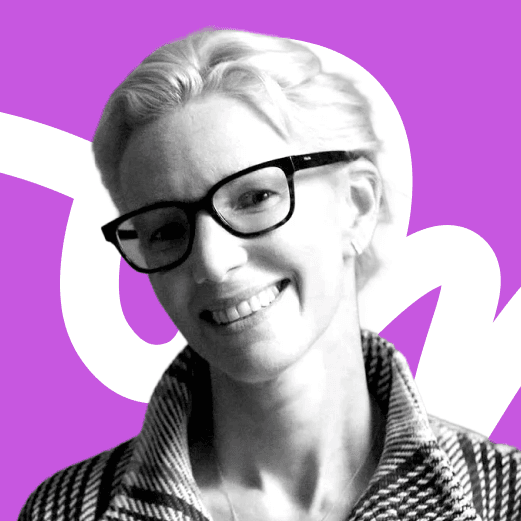
Anne Morriss
Executive Founder, The Leadership Consortium | Author & Leadership Adviser

Welcome to Vivowire, our podcast about the life of work.
Hosted by Barbara Booras, our Head of Customer Community and CX Events, Vivowire explores the ideas, leadership habits, and cultural shifts shaping the modern world of work.
What if moving fast and taking care of people weren't competing priorities?
That's the question at the heart of this episode, as Barbara sits down with Anne Morriss, executive founder of The Leadership Consortium, leadership adviser, entrepreneur, and bestselling co-author of Move Fast and Fix Things and Unleashed.
Anne has spent decades helping leaders and organizations navigate complex problems, organizational change, and leadership challenges. Alongside Frances Frei, she has developed a practical philosophy around what it takes to build organizations that can move quickly while becoming stronger, not weaker, in the process.
In this conversation, Anne challenges one of the most persistent assumptions in business: that speed inevitably comes at the expense of care.
Her argument is simple. The best leaders don't choose between moving fast and looking after their people.
They build the trust that allows them to do both.
Watch or listen
You can watch this episode of the Vivowire Podcast here, or alternatively catch it on Spotify, Apple Podcasts, YouTube, or wherever you get your podcasts.
Here are the key takeaways
1. Speed and trust aren't opposites
“Move fast and break things” has become one of the most recognizable philosophies in modern business.
But Anne believes we've misunderstood what speed actually requires.
The fastest organizations aren't necessarily the ones that tolerate the most disruption, mistakes, or collateral damage. They're the ones that have built enough trust to move quickly without constantly stopping to repair the damage they've caused.
Anne describes this as the difference between moving fast and breaking things, and moving fast and fixing things.
Trust becomes the foundation.
When people trust their leaders, they're more willing to experiment, raise concerns, share uncomfortable information, and act with urgency. Leaders can make decisions faster because they're not spending all their energy managing fear, politics, or uncertainty.
The result is a very different kind of speed: one that doesn't require people to be sacrificed along the way.
2. When things go wrong, practice the art of repair
Every organization gets things wrong.
The question isn't whether mistakes will happen. It's what leaders do next.
Anne describes organizations as being “perfectly designed for the results they get.” If the same problems keep appearing, leaders need to look beyond individual mistakes and examine the system that produced them.
And when trust has been damaged, the answer isn't simply to move on.
It needs to be repaired.
Anne's three-step playbook is straightforward:
Own it. Fix it. Stop it.
First, acknowledge what happened and take responsibility.
Then fix the immediate problem.
And finally, change whatever needs to change so the same thing doesn't happen again.
Done well, repair isn't simply about returning a relationship to where it was before. It can actually make the relationship stronger.
At the heart of that process are some very human needs: people want to feel seen, valued, and secure.
Leadership isn't about never making mistakes.
It's about becoming better at repairing them.
3. Inclusion is a competitive advantage
Anne also offers a practical perspective on inclusion.
Rather than treating inclusion solely as a moral or political issue, she argues that organizations should recognize the enormous competitive advantage that comes from creating environments where people can contribute what makes them unique.
The talent is already in the building.
The question is whether your culture allows people to use it.
True inclusion isn't simply about getting more diverse people through the door. It's about creating the conditions where different experiences, perspectives, and ways of thinking can actually influence the work.
That means paying attention to the people who aren't speaking.
The perspectives that aren't being heard.
And the talents that aren't being used because the environment makes them difficult to contribute.
For leaders, inclusion becomes less about a program and more about organizational design.
4. Psychological safety makes speed possible
Google's Project Aristotle famously identified psychological safety as the most important factor in effective teams.
Anne's perspective helps explain why.
People cannot help an organization move quickly if they don't feel safe enough to tell the truth.
They need to be able to say:
“I think we're missing something.”
“This isn't working.”
“I made a mistake.”
“What if we tried this instead?”
Those moments can feel uncomfortable, but they're exactly what high-performing organizations need.
Psychological safety doesn't mean avoiding challenge or creating a workplace where everyone agrees. In fact, it creates the opposite.
It gives people permission to challenge ideas, surface risks, experiment, and speak honestly - without worrying that doing so will damage their standing.
The result is a team that can identify problems earlier and respond to them faster.
5. Unapologetic leaders push power to the edges
Anne and Frances Frei have written extensively about what it means to be an “unapologetic leader.”
At its core, the idea is about empowerment.
Leadership isn't about holding onto every decision. It's about creating the conditions where other people can make good decisions without you.
Anne argues that leaders should unapologetically push decision-making rights toward the edges of the organization - closer to the people who have the most relevant operational information.
This is particularly important in environments where the stakes are high.
Healthcare and the military, for example, have historically been forced to innovate around distributed leadership because waiting for every decision to travel up a hierarchy can have serious consequences.
The lesson applies far beyond those industries.
If you want your organization to move faster, don't simply tell people to make decisions faster.
Give them the authority to do it.
6. The fastest way through workplace conflict may start with you
Many workplace problems show up as interpersonal friction.
A difficult colleague.
A strained relationship.
A recurring conflict.
A manager who doesn't seem to understand you.
It can be tempting to focus entirely on what the other person needs to change.
Anne suggests a different starting point: agency.
That doesn't mean pretending every workplace problem is your fault. It means recognizing that you have more influence over the situation than you may think.
One of the most useful things you can do is invite an outside perspective - someone you trust who isn't caught up in the dynamics of the situation.
Sometimes simply talking through a problem with someone who can see it more objectively can reveal options that weren't visible before.
The goal isn't to “win” the conflict.
It's to recognize your ability to co-create a different outcome.
7. Make curiosity a ritual, not a personality trait
One of the most practical takeaways from the conversation is Anne's advice to ritualize curiosity.
It's easy for leaders to say they value learning.
It's much harder to build the behaviors that make learning unavoidable.
One example is the after-action review.
Rather than only reviewing what went wrong, teams can use these conversations after both successes and failures.
What happened?
What did we expect to happen?
What surprised us?
What would we do differently next time?
The important thing is to make the process routine and objective.
When teams regularly pause to examine what happened, they create an environment where learning becomes part of the operating system - not something that only happens after a major failure.
Curiosity becomes a habit.
And habits are where culture starts to become real.
Final thoughts
This episode of Vivowire is ultimately about a deceptively simple idea: better leadership isn't about choosing between speed and care.
It's about building the trust that makes speed possible.
Anne Morriss brings a refreshingly practical perspective to some of the biggest challenges facing leaders today. Whether she's talking about repairing broken trust, creating psychological safety, empowering teams, or building more inclusive organizations, her focus consistently comes back to the same question:
What can leaders do differently tomorrow?
The answer isn't always another strategy, initiative, or framework.
Sometimes it's owning a mistake.
Sometimes it's giving someone else the authority to make the decision.
Sometimes it's asking a better question.
And sometimes it's simply creating the space for people to tell you what you're not seeing.
For anyone trying to build a faster, healthier, more human organization, this is a conversation worth spending 45 minutes with.
The people behind the voices
Barbara Booras
Head of Customer Community & CX Events at Workvivo
Barbara Booras is Head of Customer Community & CX Events at Workvivo. Specializing in Expert Services within Customer Experience, Barbara collaborates with key strategic customers with a global audience on optimizing their Workvivo experience. She spent 6+ years in New York City leading internal communications and transforming company culture at DIVINA in her role as the first Culture & Community Manager. Barbara is a self-described workplace culture nerd, obsessed with elevating the employee experience.
Now based in Boston, Barbara enjoys freelance food writing, boxing, distance running, and world travel. Barbara is a 4x marathoner currently working on completing the Abbott World Marathon Majors. Barbara has an educational background in hospitality and tourism and approaches EX with a high-touch, hospitality mindset.
Anne Morriss
Executive Founder, The Leadership Consortium | Author & Leadership Adviser
Anne Morriss is the Executive Founder of The Leadership Consortium, a leadership accelerator focused on building inclusive executive teams and helping more leaders thrive.
She is a bestselling co-author of Uncommon Service, Unleashed: The Unapologetic Leader's Guide to Empowering Everyone Around You, and Move Fast and Fix Things: The Trusted Leader's Guide to Solving Hard Problems, which she co-authored with Frances Frei. Together, Anne and Frances also host Fixable, a leadership advice podcast that helps people solve workplace challenges.
Anne has spent decades working with entrepreneurs, companies, and governments on strategy, leadership, and organizational change. She previously founded and led GenePeeks, a computational genomics company, and has worked across the private, public, and nonprofit sectors.
Her work focuses on helping leaders build organizations where people can thrive, move faster, and solve hard problems more effectively.